Explore this article · 6 sections
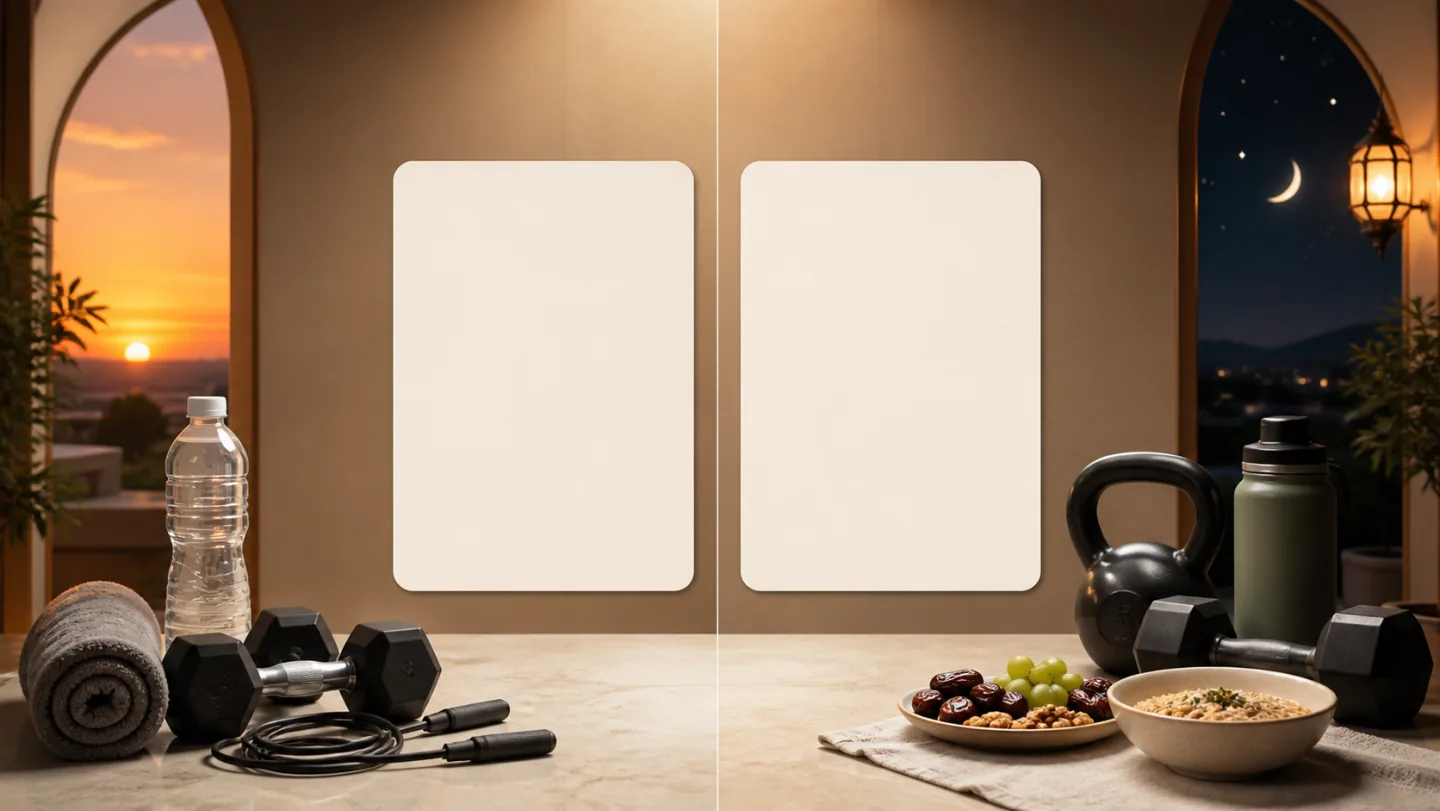
Before iftar and after iftar can both work, but they solve different problems. Before iftar lets you finish close to the first drink and meal. After iftar lets you drink during the workout and usually supports harder or longer work.
Compare the choices
| Question | Before iftar | After iftar |
|---|---|---|
| Best workout type | Short walk or reduced strength session | Strength, intervals, or longer cardio |
| Fluid during workout | Not available while fasting | Available |
| Food afterward | Available soon if timing is close | Already available |
| Main challenge | Thirst, heat, late-day fatigue | Digestion, prayer, and sleep timing |
Choose before iftar when
You can train in a cool place, keep the session short, finish near sunset, and stop when symptoms change. A 20 to 30 minute session with fewer strength sets or an easy walk is more suitable than a long interval workout. Avoid this option when work leaves you depleted, the weather is hot, or you have a medical risk related to fasting or dehydration.
Choose after iftar when
The workout is demanding, you sweat heavily, or you need fluid and food around the session. Break the fast, drink, and use a light meal if a full dinner causes discomfort. Allow digestion time, then complete the workout and eat a complete meal later. If a late session repeatedly shortens sleep, move it earlier or reduce it.
Ramadan sport research does not identify one universal winner. Reviews describe different advantages and limits for pre-iftar, post-iftar, late-night, and post-suhoor workouts, with individualization based on conditions and goals (practical review).
Include prayer and travel
Count the whole schedule, including travel, changing, Maghrib, meals, Taraweeh, family, and bedtime. A theoretically ideal workout time is not useful when it repeatedly conflicts with the parts of Ramadan that matter most to you.
How Rizanah helps
In the Rizanah mobile app, fasting settings can follow prayer-based or custom eating windows. Meals includes food and water logging, while Train keeps your weekly workout plan and completed workout history. Rizanah does not read sleep or symptoms and does not automatically change a workout because you are fasting, so you remain responsible for choosing a safe time and adjusting or stopping when needed.
Visit Rizanah to find the mobile app for iOS and Android.
The main idea
Use before iftar for short controlled work near sunset and after iftar for sessions that benefit from fluid and food. Protect sleep, prayer, and safety whichever option you choose.
This article provides general educational information rather than medical or religious advice.