Explore this article · 5 sections
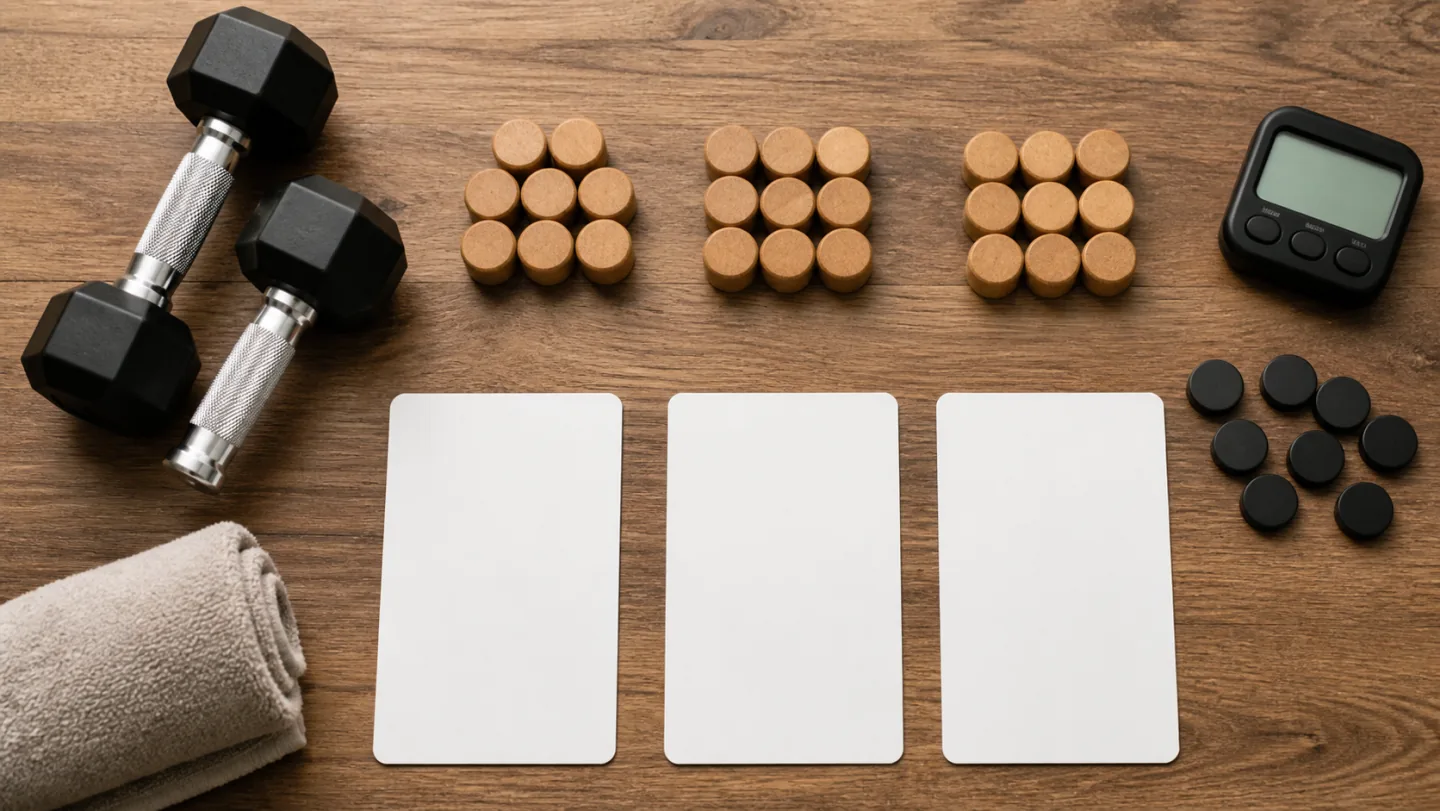
A repetition is one complete movement. A set is a group of repetitions performed before you rest. If you squat ten times, rest, and repeat ten times, you completed two sets of ten repetitions.
What different ranges can do
| Main goal | Useful starting range | Rest between sets |
|---|---|---|
| Learn the movement | 1 to 3 sets of 6 to 12 | Enough to repeat good form |
| General strength and muscle | 2 to 4 sets of 5 to 15 | About 1 to 3 minutes |
| Muscular endurance | 2 to 3 sets of 12 to 20 or more | About 30 to 90 seconds |
These ranges overlap. Muscles can grow across a broad range when sets are challenging enough, and strength depends on practice, load, and the movement being tested. You do not need to find one magical number.
Choose the load from the repetitions
Select a weight that lets you reach the planned range with steady technique. For most general workouts, finish with about two or three good repetitions still possible. If the plan calls for 8 to 12 and you could perform 20, the load or exercise may be too easy for that goal. If you cannot reach 8 without losing control, reduce it.
Count useful work
Warm-up sets prepare you but do not need to be counted as hard working sets. Record the sets that provide the planned challenge. More sets can create more stimulus, but they also require more time and recovery. Begin with less, then add work only when progress and recovery support it.
The ACSM progression model explains that programs can adjust load, volume, rest, speed, and frequency according to experience and goals (position stand). It does not support one identical prescription for every person.
How Rizanah helps
In the Rizanah mobile app, Train shows a weekly workout plan and guides each session. Workout history records completed exercises, sets, repetitions, load, and effort. You can swap an exercise when another available option fits your equipment or health information, and any progression suggestion must be accepted by you before it changes the plan.
Visit Rizanah to find the mobile app for iOS and Android.
The main idea
Repetitions describe how many movements you do, while sets organize those movements into groups. Choose a range that fits the goal, stop before form fails, and add work gradually.
This article provides general educational information rather than medical advice.