Explore this article · 5 sections
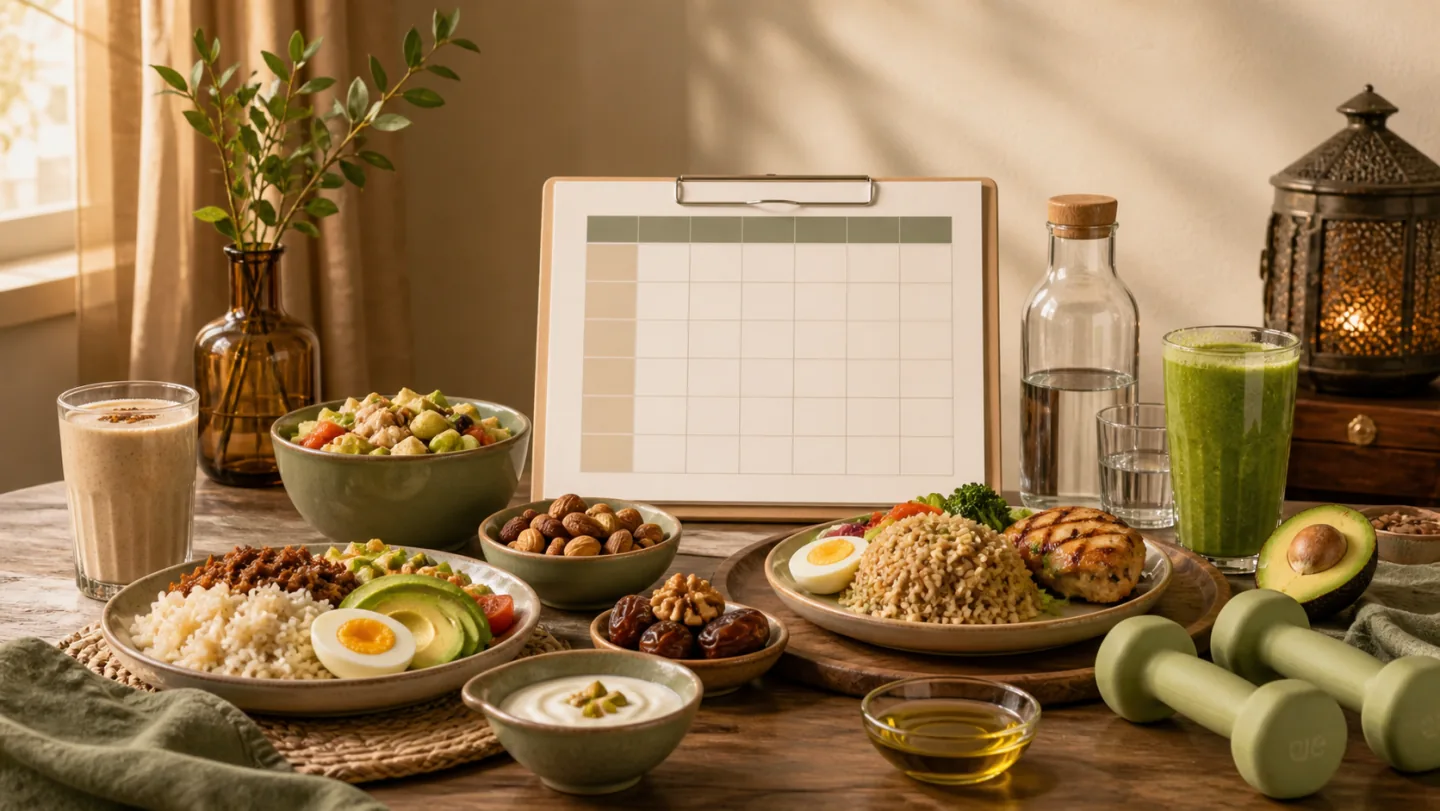
Weight gain requires enough energy across the non-fasting window. When appetite and time are limited, use several manageable eating opportunities and add energy-dense foods without making every meal painfully large.
Use a simple schedule
| Time | Example |
|---|---|
| Iftar opening | Water, dates, soup, and yogurt |
| Main meal | Rice, chicken or tofu, vegetables, and olive oil |
| Later snack | Smoothie with milk or soy drink, oats, fruit, and nut butter |
| Suhoor | Eggs, bread, avocado, fruit, yogurt, and water |
Add nuts, seeds, tahini, olive oil, avocado, cheese, full-fat yogurt, dried fruit, rice, bread, or potatoes to meals you already tolerate. Liquid food can help when chewing another meal feels difficult, but drinks should not replace all whole foods.
Include protein more than once
Place a protein source in two or three eating opportunities. A position stand suggests that 1.4 to 2.0 grams per kilogram daily can meet the needs of many exercising adults, although needs vary (position stand). Strength workouts two or three times weekly help direct some gain toward useful muscle, but muscle gain is gradual and some fat gain can occur.
Adjust from a weekly trend
Weigh under similar conditions if weighing is appropriate for you. If the weekly average does not rise after two or three weeks, add one repeatable item, such as a daily nut-butter sandwich or a larger rice portion. Do not change five things at once.
A systematic review found average Ramadan reductions in energy and some macronutrient intakes, with wide variation (review). This explains why intentional planning may be needed, but it does not supply one portion for everyone.
Unexplained weight loss, swallowing problems, severe digestive symptoms, pregnancy, diabetes, kidney disease, or an eating-disorder history requires individualized clinical support.
How Rizanah helps
In the Rizanah mobile app, fasting settings can follow prayer-based or custom eating windows. Meals includes food and water logging, while Train keeps your weekly workout plan and completed workout history. Rizanah does not read sleep or symptoms and does not automatically change a workout because you are fasting, so you remain responsible for choosing a safe time and adjusting or stopping when needed.
Visit Rizanah to find the mobile app for iOS and Android.
The main idea
Eat several times, enrich foods you already tolerate, include protein throughout the window, and make one small adjustment when the trend stays flat.
This article provides general educational information rather than medical or religious advice.