Explore this article · 8 sections
Weight loss requires an average energy deficit over time, but the deficit does not need to come from skipping whole food groups or eating tiny meals. A modest plan protects nutrition, includes familiar halal foods, and changes when the evidence from several weeks says it should.
Begin with a balanced plate
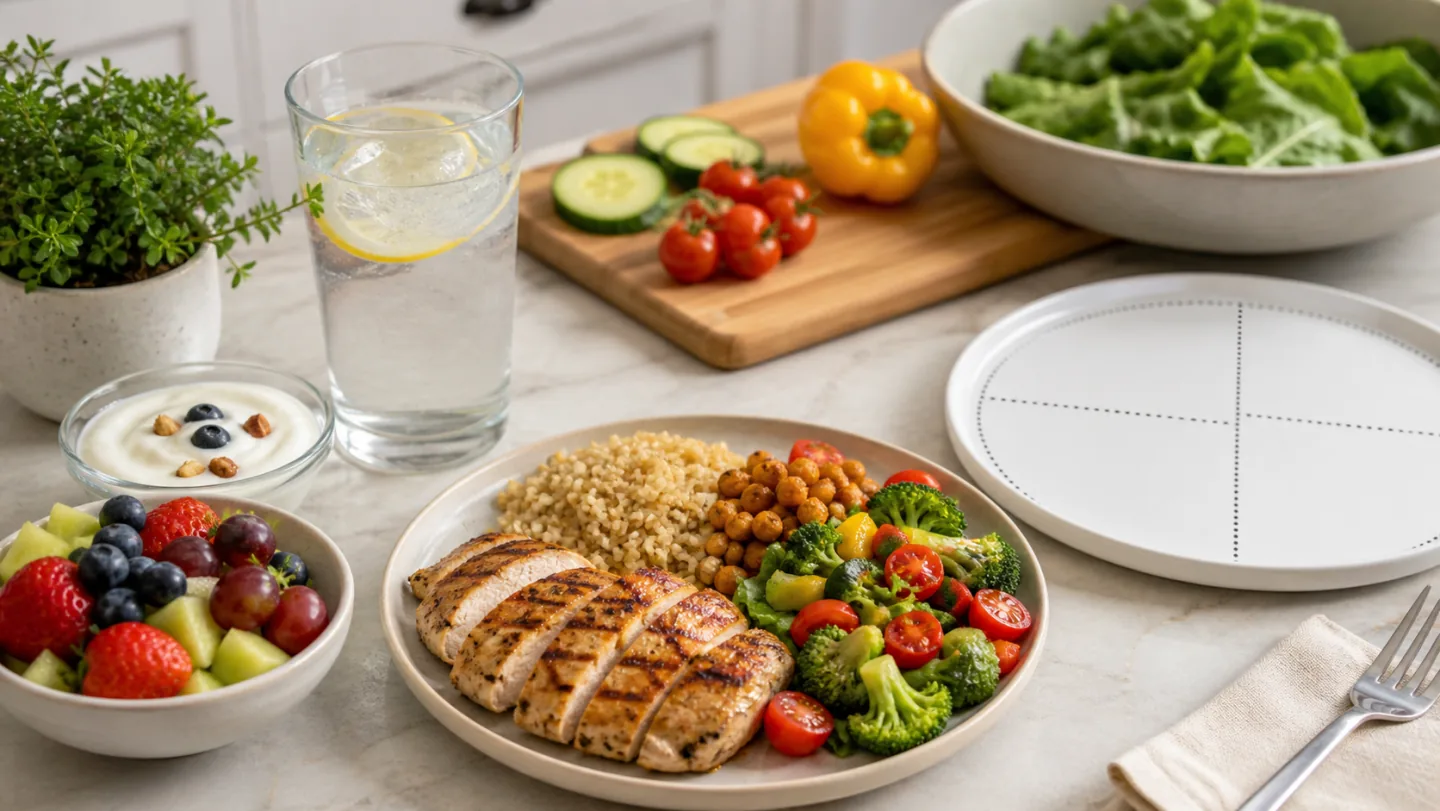
At lunch and dinner, start with half a plate of vegetables, one quarter protein, and one quarter rice, bread, pasta, potatoes, or another carbohydrate food. Add fruit, dairy or a fortified alternative, and a modest amount of oil or sauce according to hunger and nutrition needs.
This method does not produce the same calorie intake for everyone. Larger, more active people usually need more food. A registered dietitian can help when a precise target is medically important.
A repeatable day
| Meal | Example | Flexible adjustment |
|---|---|---|
| Breakfast | Two eggs, whole-grain toast, fruit | Add yogurt for more protein or use one slice of toast when less hungry |
| Lunch | Halal chicken, rice, and a large salad | Increase rice on hard workout days |
| Snack | Greek yogurt and berries | Use fruit and nuts for a dairy-free choice |
| Dinner | Lentil soup, fish or tofu, vegetables, and bread | Add bread when the meal does not satisfy you |
Protein and fiber make the plan easier to follow
Protein supports muscle, especially when weight loss is paired with resistance workouts. Beans, lentils, vegetables, fruit, and whole grains provide fiber and volume. Spread protein across meals rather than trying to repair a low-protein day with one enormous serving.
The ISSN position stand reports that about 1.4 to 2.0 grams of protein per kilogram per day is sufficient for most exercising people, although individual needs and medical restrictions vary (ISSN protein position stand). A person who is not exercising does not automatically need that range.
A seven-day structure
Rotate three breakfasts, three lunches, and three dinners rather than buying ingredients for 21 unrelated meals. Examples include egg toast, yogurt oats, or bean breakfast wraps; chicken bowls, lentil soup, or tuna wraps; and fish with potatoes, tofu stir-fry, or halal turkey chili.
Keep sauces and cooking fats measured during the first few weeks if they are easy to pour without noticing. This is information, not a rule that oil or sauce is bad.
Adjustment rules
Use the same general plan for two to four weeks before making a major change, unless a clinician says otherwise. Daily body weight moves with fluid, sodium, digestion, and the menstrual cycle. Review the average trend, hunger, energy, sleep, and workout performance.
If nothing changes and the plan was followed most of the time, reduce one regular portion slightly or add a manageable amount of walking. If hunger is strong, workouts worsen, or weight falls rapidly, add food and seek professional guidance when needed.
Who needs clinical advice
Do not use a general weight-loss plan during pregnancy, for a child, or when recovering from an eating disorder. People using glucose-lowering medicines, managing kidney disease, or experiencing unexplained weight change should speak with a qualified clinician.
How Rizanah helps
In the Rizanah mobile app, Meals lets you log food, see protein and other nutrition totals, plan meals, save meals, browse or create recipes, and keep pantry and grocery lists. Foods and recipes can display halal guidance, including labels that tell you when an item needs checking. Those labels support your review, but they do not replace current certification or the exact package information.
Visit Rizanah to find the mobile app for iOS and Android.
The main idea
Use balanced meals, a modest change in portions, and several weeks of evidence. A plan should support daily life and strength work while weight changes gradually.
This article provides general educational information rather than medical advice.