Explore this article · 6 sections
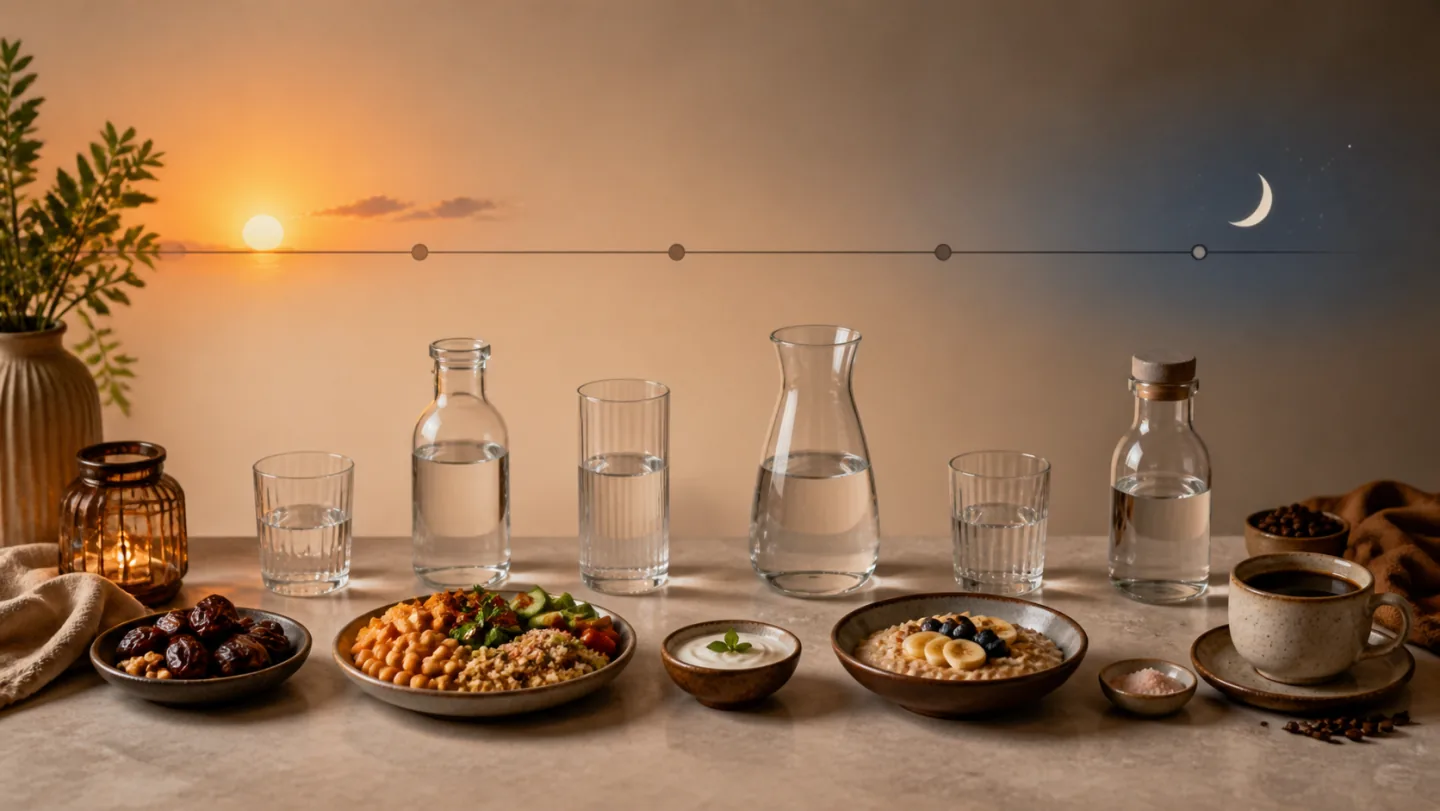
You cannot store an unlimited amount of water at suhoor. A better Ramadan hydration plan spreads drinks and water-rich foods across the non-fasting window, then adjusts for heat, sweat, body size, health, and the length of the fast.
Build several drinking points
| Time | Practical action |
|---|---|
| At iftar | Begin with water and drink with the opening food |
| With the main meal | Drink according to thirst and comfort |
| Through the evening | Keep water available and sip regularly |
| After a workout | Replace fluid gradually with food |
| At suhoor | Drink again without forcing painful amounts |
There is no single correct number of glasses for everyone. Urine that remains very dark, strong thirst, headache, dry mouth, falling performance, or unusual fatigue can suggest that intake or conditions need attention, but urine color alone cannot diagnose dehydration.
Consider electrolytes without hype
Sodium helps retain fluid and replaces sweat losses. Normal meals often provide it. A long, hot, sweaty workout may justify a suitable electrolyte drink after iftar, while a short cool walk may not. More sodium is not always better, particularly for people with high blood pressure, heart failure, or kidney conditions.
Ramadan sport reviews identify daytime hypohydration as a possible problem, especially with prolonged effort and heat, and recommend individualized timing, cooling, and hydration strategies (practical review). Evidence from athletes does not create one exact fluid target for every adult.
Watch caffeine and very large meals
Caffeine affects people differently, but late coffee or energy drinks can reduce sleep. Very salty food may worsen thirst. Soups, yogurt, milk, fruit, vegetables, and cooked grains can contribute fluid as well as nutrients.
Know when to stop a workout
Stop for faintness, confusion, loss of coordination, chest symptoms, severe weakness, or signs of heat illness. Move to a cooler safe place and obtain urgent help when symptoms are severe. People who use diuretics or medicines affected by fluid, or who have diabetes, kidney, or heart conditions, need a plan from their clinician.
How Rizanah helps
In the Rizanah mobile app, fasting settings can follow prayer-based or custom eating windows. Meals includes food and water logging, while Train keeps your weekly workout plan and completed workout history. Rizanah does not read sleep or symptoms and does not automatically change a workout because you are fasting, so you remain responsible for choosing a safe time and adjusting or stopping when needed.
Visit Rizanah to find the mobile app for iOS and Android.
The main idea
Drink at several points, use food as part of hydration, adjust for sweat and climate, and seek individualized guidance when health or medicines affect fluid balance.
This article provides general educational information rather than medical or religious advice.