Explore this article · 9 sections
You can eat before a workout, after it, or at both times. The useful choice depends on when you last ate, what the workout demands, how your stomach feels, and when you can eat again. Most people do not need to chase a tiny nutrition window.
Start with the simple answer
Use this table as a starting point rather than a strict rule.
| Your situation | A practical choice |
|---|---|
| You ate a balanced meal two to four hours ago | Work out, then eat your next normal meal afterward |
| Your last meal was many hours ago | Have a small snack before the workout |
| The workout is long, hard, or endurance-focused | Eat carbohydrate beforehand and plan food afterward |
| Food sits heavily in your stomach | Use a smaller, lower-fat snack or allow more digestion time |
| You will not be able to eat for several hours afterward | Eat before the workout and carry a suitable meal or snack |
| The workout is an easy walk or short gentle session | Special timing is usually unnecessary |
The joint position statement from the Academy of Nutrition and Dietetics, Dietitians of Canada, and the American College of Sports Medicine explains that food and fluid choices should match the activity, recovery period, and athlete rather than follow one plan for everyone (position statement).
What to eat before a workout
A pre-workout meal should give you useful energy without causing discomfort. Carbohydrate is especially useful for demanding or longer sessions, while some protein can help you reach your daily needs.
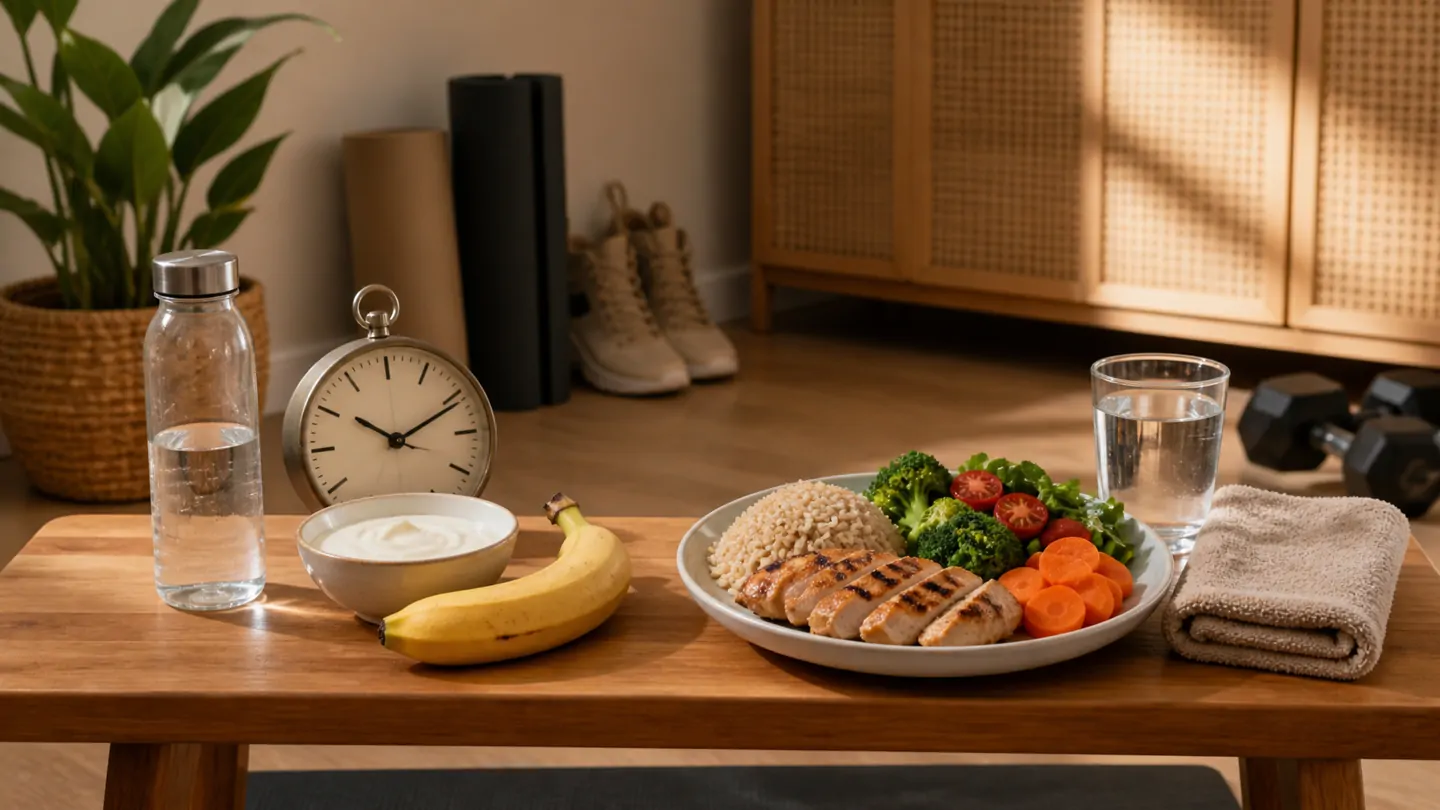
Try a normal meal two to four hours beforehand:
- Rice, grilled chicken, and vegetables
- Oatmeal with milk or yogurt and fruit
- Eggs, bread, fruit, and water
- Lentils, rice, and a small salad
- A tuna or tofu sandwich with fruit
If you have only 30 to 90 minutes, choose a smaller option that is easy for you to digest. Examples include a banana with yogurt, toast with egg, dates with milk, or a small bowl of cereal. A large portion of fried food, heavy sauce, or very high-fiber food may feel uncomfortable close to hard movement, although tolerance differs.
There is no required pre-workout product. Familiar food is often cheaper, easier to verify, and more satisfying than a supplement sold for workout energy.
What to eat after a workout
After a workout, the main jobs are to replace fluid, eat enough total food, obtain protein, and restore carbohydrate when the session used a meaningful amount of energy. A balanced meal can do all of those jobs.
A useful plate may include:
- A protein food such as halal poultry or meat, fish, eggs, dairy, beans, lentils, or tofu
- A carbohydrate such as rice, potatoes, bread, pasta, oats, couscous, or fruit
- Vegetables or fruit
- Water and, when appropriate, normal sodium-containing food
The International Society of Sports Nutrition states that total daily protein is a main priority. It also reports that protein before or after a workout can support muscle protein synthesis, while the size and timing of the earlier meal affect how urgently protein is needed afterward (ISSN position stand).
If you ate a meal containing protein shortly before the workout, you do not need to panic when another meal is not ready within 30 minutes. If you worked out after a long gap without food and will not eat again for hours, eating sooner is more useful.
Match the food to the workout
Strength workout
Eat enough across the full day, then place a meal or snack containing protein somewhere near the workout. Add carbohydrate when the session is long, has many hard sets, or follows a long period without food.
Walking or gentle movement
A short, comfortable walk usually does not require a special snack. Walking after a meal can also reduce the immediate rise in blood glucose. A systematic review and meta-analysis found a greater short-term reduction in post-meal glucose when activity occurred after eating rather than before, although the included trials were small and had important limitations (systematic review).
Long or demanding cardio
Carbohydrate matters more as duration and intensity increase. Eat a tolerable meal beforehand, begin hydrated, and plan food and fluid for afterward. Competitive endurance events require a more specific plan that has been tested during practice.
Early morning workout
Some people feel comfortable doing a short morning workout before breakfast, while others feel weak, hungry, or nauseated. If eating first helps, try a small banana, toast, yogurt, or milk. If you prefer breakfast afterward, keep the workout suitable for your experience and health.
Halal checks still matter
Ordinary whole foods can make halal review simpler, but the exact ingredients and preparation still matter. Check meat sourcing, gelatin, animal-derived enzymes, flavor carriers, capsules, shared fryers, and alcohol-containing ingredients according to the standard you follow.
A halal logo on one flavor does not prove that every flavor or package is certified. Use the current certifier listing and exact package when verification matters. People with food allergies also need separate allergen and cross-contact checks because halal status does not establish that a food is allergen-free.
When medical needs change the answer
People using insulin or medicines that can cause low blood glucose need individualized instructions for food, medicine, and activity. Pregnancy, digestive disorders, kidney disease, eating-disorder recovery, and other medical conditions can also change suitable portions and timing.
Stop exercising and seek appropriate help for fainting, confusion, chest symptoms, severe weakness, or another urgent warning sign. Food timing should not be used to explain away a dangerous symptom.
How Rizanah helps
In the Rizanah mobile app, Meals lets you log food, see protein and other nutrition totals, save meals, plan meals, browse or create recipes, and record water. Train keeps your weekly workout plan and completed workout history. These records can help you compare what you ate with what you completed, but Rizanah does not decide that a meal, fast, or workout is medically safe.
Join the Rizanah waitlist for the mobile app for iOS and Android.
Frequently asked questions
Do I have to eat protein immediately after lifting?
No. Protein after lifting is useful, but the earlier meal and your total daily intake matter. If you ate protein before the workout, your next balanced meal can often cover the need without a rushed shake.
Is it bad to work out on an empty stomach?
Not automatically. Some people tolerate short or easy sessions without eating first. A long, intense, or unfamiliar workout may feel and perform better with food beforehand. Medical conditions and medicines can make fasted exercise inappropriate.
Should I eat before a workout if I want to lose weight?
Choose the timing that supports a repeatable workout and a suitable overall eating pattern. Skipping food before exercise does not guarantee more body-fat loss, and eating beforehand does not prevent it.
How long should I wait after a large meal?
Many people prefer two to four hours before demanding movement, but meal size, fat, fiber, exercise type, and personal digestion change the answer. Begin with more time after a large meal and adjust from experience.
The main idea
Eat before a workout when you need energy or face a long gap between meals. Eat afterward to support recovery and complete the nutrition your day still needs. When either timing works, choose the one that feels comfortable and fits your real schedule.
This article provides general educational information rather than medical advice.