Explore this article · 10 sections
Macros are protein, carbohydrate, and fat. Calculating them can help with muscle gain, but the numbers are starting estimates rather than commands. Your weight trend, workout performance, digestion, and recovery show whether the plan works.
Step 1: Set protein
The International Society of Sports Nutrition reports that about 1.4 to 2.0 grams of protein per kilogram of body weight per day is sufficient for most exercising adults (ISSN protein position stand).
For a 70-kilogram lifter using 1.6 grams per kilogram:
70 × 1.6 = 112 grams of protein per day
Protein has about four calories per gram, so 112 grams provides about 448 calories.
Step 2: Set a calorie starting point
Energy needs cannot be calculated perfectly from a formula. Use a reputable calculator or a stable two-week food and weight record to estimate maintenance. Then add a small amount of food, such as 150 to 300 calories per day, and watch the trend for several weeks.
A larger surplus does not force faster muscle growth because it can add more body fat. Beginners and people returning after a break may gain muscle with little or no deliberate surplus.
Step 3: Set fat
Dietary fat supports normal body functions and helps meals feel satisfying. For an example 2,500-calorie plan, we can start with 75 grams:
75 × 9 = 675 calories from fat
This is an example rather than a universal target.
Step 4: Fill the rest with carbohydrate
Subtract protein and fat calories from the daily total:
2,500 - 448 - 675 = 1,377 calories
Carbohydrate has about four calories per gram:
1,377 ÷ 4 = about 344 grams of carbohydrate
| Macro | Daily example | Calories |
|---|---|---|
| Protein | 112 g | 448 |
| Fat | 75 g | 675 |
| Carbohydrate | 344 g | 1,376 |
| Total | 2,499 |
The arithmetic is exact, but food labels and portions are not. Treat a few grams either way as normal measurement noise.
A halal-food day using the example
| Meal | Food idea |
|---|---|
| Breakfast | Oats with milk, banana, nut butter, and eggs |
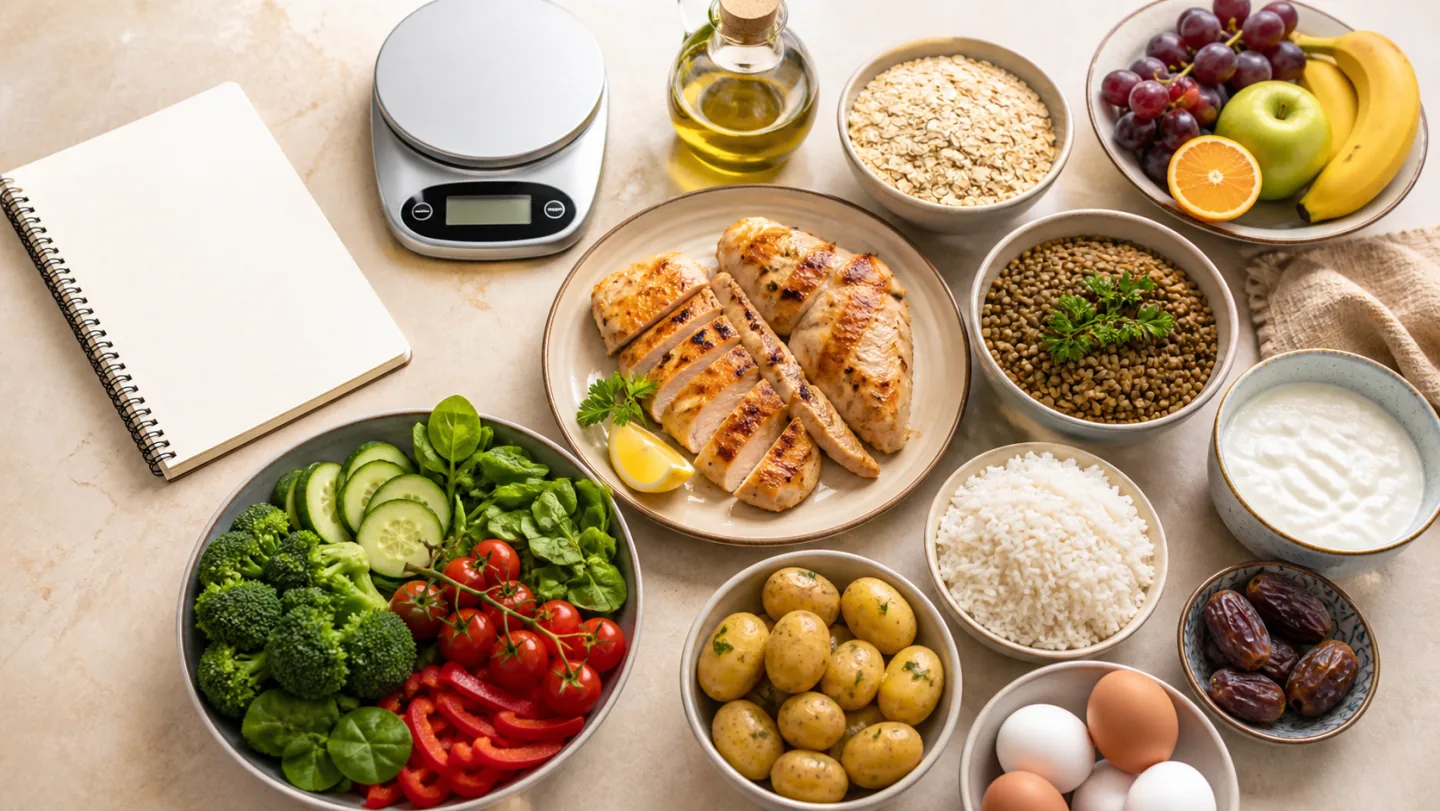
| Lunch | Halal chicken, rice, vegetables, olive oil, and yogurt |
| Snack | Greek yogurt, dates, and granola |
| Dinner | Lentil curry, potatoes or rice, salad, and halal beef or tofu |
| Optional add-on | Milk smoothie with fruit and oats |
Check meat, gelatin, enzymes, flavorings, and processed supplements according to the standard you follow. The Codex halal guidelines explain that halal status concerns ingredients and preparation, not whether a food automatically has better nutrition.
Adjust from real results
Use the same conditions for a few weekly weigh-ins and compare averages, not single days. If body weight and gym performance do not rise after two to three consistent weeks, add a repeatable portion. If weight rises much faster than intended and waist measurements climb quickly, reduce a portion.
Experienced lifters often need slower changes because muscle gain becomes harder with experience. Sleep, workout quality, and total weekly sets also matter, so food cannot repair a poor workout plan.
When not to count macros
Do not use macro tracking if it causes fear, guilt, social isolation, or repeated restriction. People with an eating-disorder history, kidney disease, pregnancy, or another relevant condition should seek individual professional guidance.
How Rizanah helps
Most macro apps answer only the nutrition question. Rizanah is designed to keep the nutrition estimate beside the halal information that matters to Muslim users, so you can check a food, record a meal, and compare the result with your protein and energy goals without switching between several disconnected tools.
You can also save the meals you repeat and adjust a portion when your weight trend or workout performance changes. Rizanah still treats restaurant estimates and disputed ingredients honestly because an app should never turn incomplete information into false certainty.
Frequently asked questions
Do I need 2 grams of protein per kilogram?
Not necessarily. The research range is broad, and many people make progress below its upper end. Choose a workable point and judge it with your results.
Are carbohydrates bad for muscle gain?
No. Carbohydrates provide energy and can support demanding workouts. Food quality and overall intake still matter.
Can I gain muscle without counting?
Yes. Use repeatable meals, include protein each time, add a consistent portion, and track strength and body-weight trends.
The main idea
Set protein first, choose a reasonable fat amount, let carbohydrate fill the remaining energy, and adjust with several weeks of real data. Halal checks and macro calculations answer different questions, so use both where they matter. Rizanah brings those two checks together when you are ready to track the plan.
This article provides general educational information rather than medical advice.